
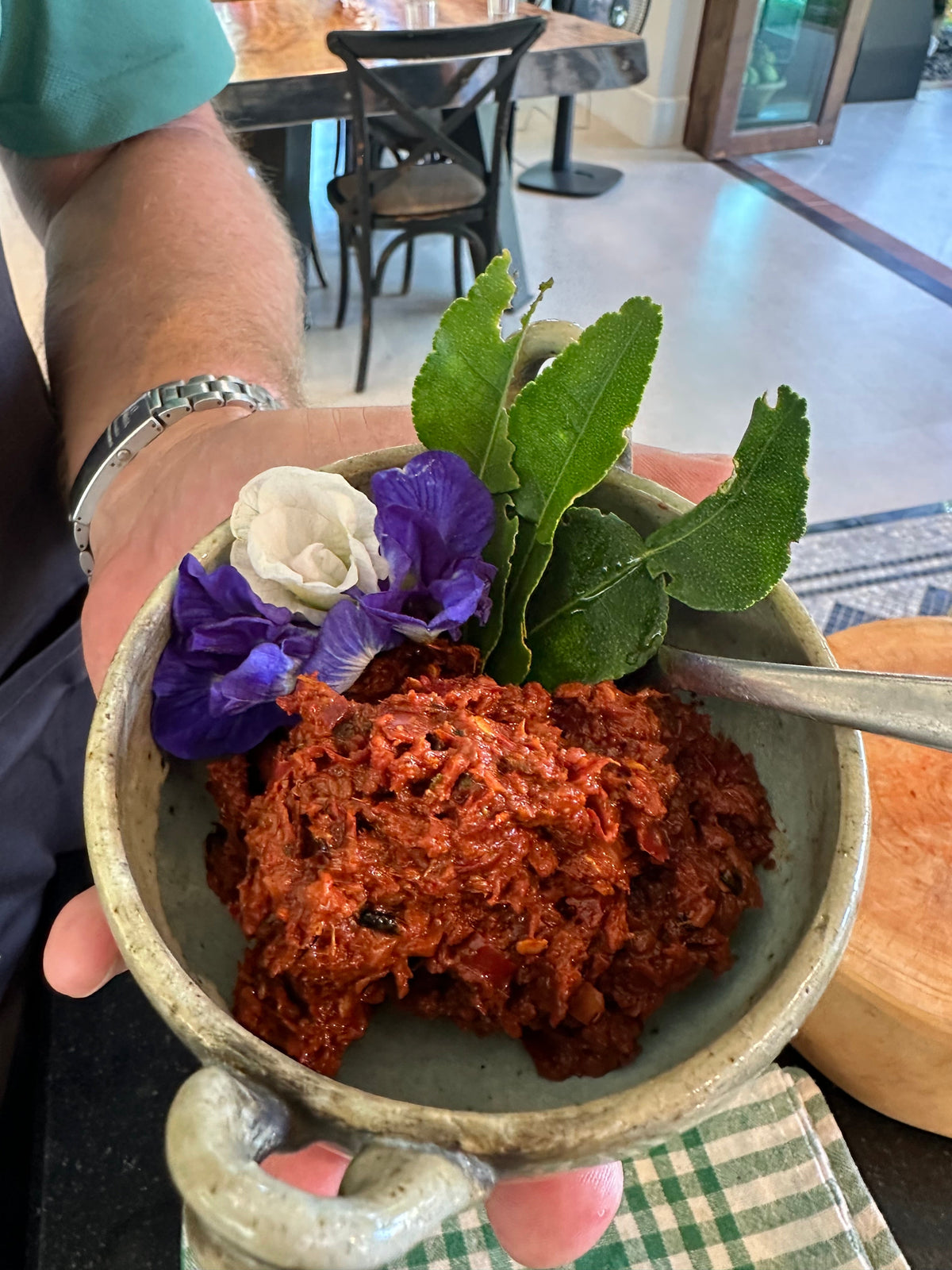
The Heart of Thai Cooking: Why We Still Make Curry Paste by Hand
When you walk into a Thai kitchen, one of the first things you may notice is the smell. Lemongrass, galangal, kaffir lime, chillies, garlic and fresh herbs. Each ingredient has its own character, and together they create something wonderful.
For me, this is where Thai cooking begins: with the ingredients.
One of my favourite parts of preparing a traditional Thai meal is making curry paste by hand. It takes a little time and some effort, but I love the process. I choose the ingredients, prepare them one by one, and slowly bring them together in my mortar and pestle.
It is a very different experience from opening a packet or a jar.
A little patience makes a difference
Traditional Thai curry pastes are made by pounding fresh ingredients together in a stone mortar. Usually, the harder and more fibrous ingredients go in first, followed by the softer ones.

Lemongrass, galangal, roots, garlic, shallots, chillies and spices each contribute something different. As they are crushed, their aromas are released and their flavours begin to combine.
You can hear the rhythm of the pestle and smell the ingredients changing as you work. Slowly, separate pieces become a fragrant paste.
Of course, there are convenient ways to prepare curry paste today, and good ready-made pastes can be useful. But when I make it myself, I can choose the ingredients, adjust the balance and enjoy the freshness of the result.
And I believe that the time and care we put into preparing food are part of the pleasure of cooking.
Knowing what goes into our food
I love growing herbs and using fresh ingredients whenever I can. In my garden, I grow some of the plants that are part of everyday Thai cooking.
Lemongrass, galangal, chillies and makrut lime leaves are more than ingredients that give a dish its flavour. They are plants with their own aromas, natural compounds and characteristics.

Many herbs and spices contain naturally occurring plant substances, including polyphenols and aromatic compounds. These are part of what makes plants so interesting. They help plants interact with and respond to their environment, and scientists are continuing to study how some of these compounds interact with our bodies and gut microorganisms.

I find this fascinating. There is still so much to learn about the plants we have used in our kitchens for generations.
For me, it is another reason to appreciate fresh, varied ingredients and to understand where our food comes from.
Cooking is more than following a recipe
When I teach Thai cooking, I don't want my guests simply to follow instructions and remember a list of ingredients.
I want them to touch the herbs, smell them, taste them and understand the differences. I want them to discover why we use galangal instead of ginger in certain dishes, what makes lemongrass so special, and how different ingredients work together.
And, of course, I want them to try the mortar and pestle themselves!
Sometimes people are surprised by how much work goes into making curry paste. But once they have tried it, they understand something important: Thai cooking is not only about the final dish. It is also about the process, the ingredients and the knowledge passed from one generation to the next.

A connection with nature and tradition
I grew up in Thailand, where food and nature have always been closely connected. Many ingredients come from the garden, the local market or the surrounding countryside.
I still enjoy that connection today. There is something special about picking fresh herbs, preparing them by hand and turning them into a meal to share with family and friends.
Food brings people together. It carries memories, traditions and a sense of belonging.
That is what I hope to share in my kitchen: not just how to cook a few Thai dishes, but a little of the culture, care and appreciation behind them.

Because sometimes the most beautiful part of cooking is not what ends up on the plate, but everything that happens before it gets there.
With love from my kitchen,
Sasi ❤️
If you would like to experience traditional Thai cooking for yourself, I would love to welcome you to my kitchen in Pattaya.


